Exam 1, Anatomy & Physiology
September 20, 2001
Multiple Choice (1 pt each) Use Scantron for questions
1-30
1______ A plane that separates the body into
anterior and posterior parts is called a: A) medial plane. B)
frontal plane.
C) sagittal plane.
D) cranial plane. E) transverse plane.
2 ______ The teaching of gross anatomy was revolutionized
during the Renaissance by the "Father of Modern Anatomy":
A) Galen. B) Avicenna. C) Cannon.D) Vesalius. E) Hugh Hefner.
3 ______ The "sex hormones," estrogen and testosterone,
are derived from: A) proteins. B) orginal sin.
C) phospholipids. D) cholesterol. E) amino acids.
4______ Prostaglandins are a type of: A) protein.
B) lipid. C) enzyme. D) nucleic acid E) carbohydrate.
5______ The thoracic cavity and the abdominal
cavity are separated by the: A) pleural membranes. B) spinal cord.
C)
diaphragm. D) rib cage.
6_______ The accurate view of blood circulation
was described in the 17th century by: A) Vesalius. B) Metrodora.
C)
Descartes. D) Harvey. E) the LA Times.
7______ Sucrose and lactose are examples of:
A) dipeptides. B) polysaccharides.C)
triglycerides. D) disaccharides. E)
monosaccharides.
8______ Water molecules interact with each
other by: A) ionic bonds. B) hydrogen bonds. C) covalent
bonds.
D) non-polar bonds.
E) peptide bonds.
9______ "All cells come from pre-existing
cells" is part of the: A) germ theory. B)
cell theory. C) theory of evolution.
D)
Hippocratic oath. E) Pledge of Biological Allegiance.
10______ The snakes that are part of the caduceus
originate from: A) snake handlers in early Christian hospitals.
B) temples of Aesculapius in ancient
Greece. C) the art of Da Vinci. D) the practices of ancient Egyptians.
E) none of the above; they just look
cool.
11______ Glycogen and starch are examples
of: A) polypeptides. B) fatty acids.
C) polysaccharides. D) monosaccharides E)
triglycerides.
12______ "K" is the elemental symbol
for: A) calcium. B) chloride. C) kryponite.D)
potassium. E) iron.
13______ A typical fever is best described
as a/an: A) positive feedback cycle. B)
negative feedback cycle.
C) malfunction
in a control center. D) altered set point. E) malfunction in a
receptor.
14______ Vaccination was pioneered by:
A) Jenner. B) Harvey. C) Vesalius. D)
Aztecs. E) van Leeuwenhoek.
15______ Nipples of a human are anterior,
but nipples of a cat are: A) ventral B) caudal. C) dorsal.
D) posterior.
E) trick question,
cats don't have nipples!
16______ A compound that contains a carboxyl
group (-C00H) is: A) a base. B) an acid. C) saccharide
D) salt. E) none of the above.
17______ Blood, bile, black bile, and phlegm are:
A) the four elements of Egyptian medicine. B) the four humors.
C) four of the five elements in ancient Chinese medicine.
D) the four horsemen of the Apocalypse.
E) nicknames for the guards and tackles on the Kingsmen football team.
18 ______ The ribs are ____ to the heart and
lungs. A) deep. B) ipsilateral. C)
anterior. D) dorsal. E) external.
19.______ The lipids found in cell membranes
are mostly: A) triglycerides
B)
neutral fats. C) phopholipids. D) trans fatty acids. E)
derived from chili cheese fries from Del Taco.
20_____ Active sites are components of:
A) polysaccharides. B) structural proteins
C) enzymes. D) phospholipids. E) steroid hormones.
21.______ If an incision cuts the heart into
left and right parts, the section is a:
A) frontal section. B) transverse
section. C) sagittal section. D) coronal section. E) C-section.
22______ The ankle is _______ to the knee
(even when the body isn't in anatomical position). A) superior.
B) inferior.
C) proximal. D) distal.
E) posterior.
23______ A collection of tissues organized
to perform a specific function is referred to as a/an: A) organism.
B) system.
C) organ. D) metabolic
unit. E) none of the above.
24______ The _____ is the basic structural
and functional unit of life. A) organism. B)
gene. C) cell. D) tissue. E) water molecule.
25_____ CH2O
is the general formula for: A) any organic molecule. B) carbonated
water. C) a lipid. D) a
carbohydrate. E) a peptide.
26_____ A triglyceride is the product of 1
glycerol and three: A) amino acids. B)
saccharides. C) cholesterols. D) fatty acids. E) phospholipids.
27_____ The bond that forms between a sodium
ion (Na+) and a chloride ion (Cl-) is a/an ______ bond. A) hydrogen.
B)
covalent. C) ionic. D) doric.
E) salt.
28 _____ Partially hydrogenated oils contain
_____ that may increase the risk of heart disease, just like saturated
fats.
A) cis fatty acids.
B) phospholipids. C) monounsaturated fats. D) trans fatty acids.
E) triglycerides.
29.______ Most enzyme names can be recognized
by the suffix: A) -aze. B) -ose. C)
-son D) -yme E) -ase.
30 ______ Forming a water molecule as a result or byproduct
of a reaction is known as a ____ reaction. A) hydration.
B) condensation. C) hydrolysis. D) activation.
E) a miracle.
Fill Ins: (1-3 pts each)
A/an _________________ is the simplest body
structure to be composed of two or more types of tissues.
Metabolism is the combination of _____________________________
("building up
reactions") and ________________________________
("tearing down reactions").
A pH of _______ is considered neutral.
If solution "X" has 100 times fewer hydrogen
ions than a neutral solution, solution "X"
has a pH of ___________. (a number)
In a ______________________ _______________________
mechanism, the output of
the system intensifies the original stimulus,
leading to an unstable situation. An
example of this type of system is ___________________________________________
____________________________________________________.
Pima Indians have high rates of the disease
________________________________
(be specific).
A nucleotide contains 3 components: a base,
________________ & ____________.
Short answers (3 pts each)
Define "Homeostasis"
What is the difference between a cofactor
and a coenzyme? How are they similar?
List 3 key roles for water in the body.
Describe "Anatomical Position."
Name three elements that are important in
nerve and muscle physiology.
What are three key characteristics of enzymes?
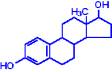
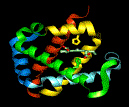
Identify the following molecules (be as specific
as possible) (3 pts each)
______________________________
________________________________
Describe two features of the Hippocratic Oath
that are as important in medicine today as they were in ancient Greece.
Also, describe one feature of the oath that would be specific to life in ancient
Greece and not relevant to medicine today. (6
pts)
Important Today:
Specific to ancient Greece:
Many contributions to Western medicine have
been made by non-Western societies.
List one contribution to Western medicine provided by Arabic (Islamic) culture
in the Middle Ages and one by New World (North or South American) Indians.
(4 pts)
Outline a negative feedback system that would
regulate body temperature or blood glucose levels. (6 pts)
Extra Credit:
"If a physician make a large incision
with an operating knife and cure it, or if he open a tumor (over the eye)
with an operating knife, and saves the eye, he shall receive ten shekels in
money. If the patient be a freed man, he receives five shekels. If
he be the slave of some one, his owner shall give the physician two shekels."
The above quote is from the: A) Bible.
B) Koran. C) Code of Hammurabi. D)
Cannon of Medicine by Avicenna. E) Blue Cross subscribers handbook.